
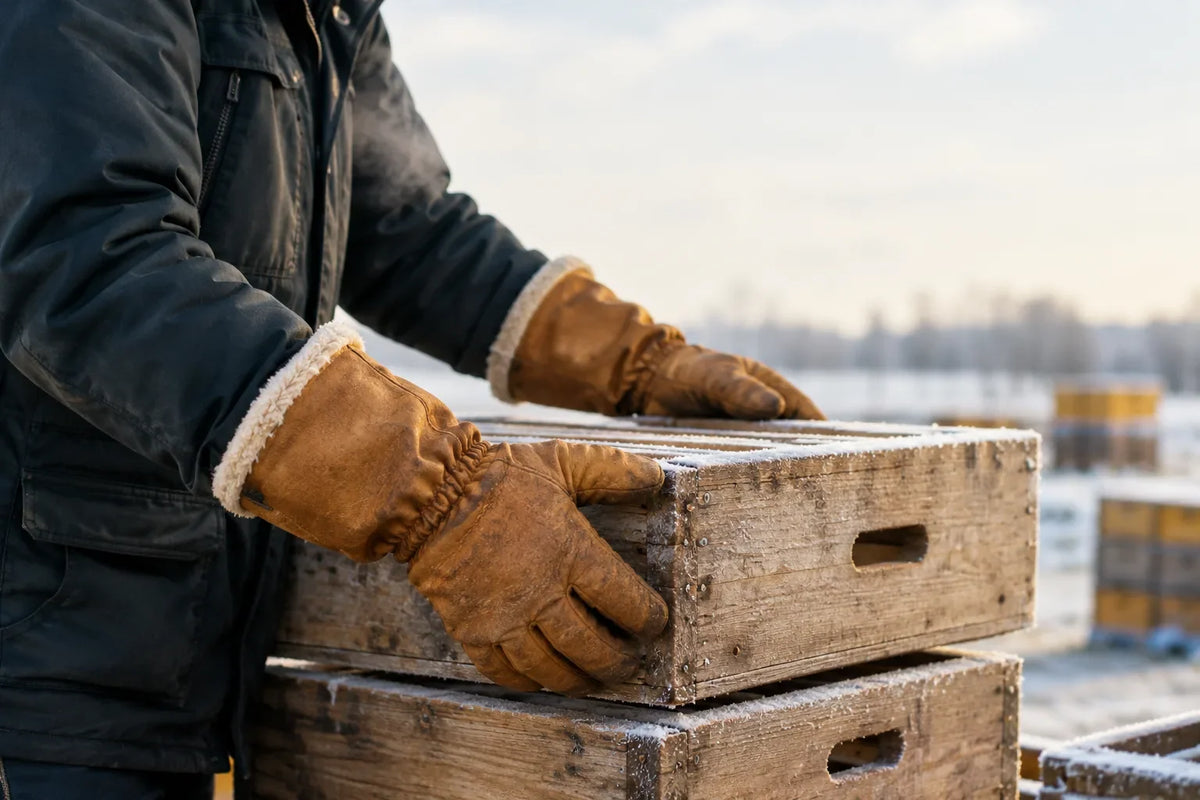
Working in the cold British winters is certainly not an easy task. Handling goods, yarding or even standing for long in extreme temperatures can make your hands go numb, lose feel and decrease how well you can work.
And the solution to this? A good pair of winter gloves. You need gloves that are warm and water-resistant but thin enough to not hinder any movement or decrease grip.
This blog introduces you to everything that makes a glove the best glove for winter work.
TL;DR
-
The EN 511 marking indicates a glove’s tested performance against convective cold, contact cold and water permeation.
-
Choose glove insulation based on your work. Thicker linings offer more warmth, while thinner ones allow better hand movement.
-
Winter waterproof work gloves keep water out, while water-resistant gloves protect against light splashes and moisture.
-
The best winter work gloves also need a proper fit, which is important for grip, comfort and handling tools safely during cold weather work.
-
SaftaBee’s winter gloves include fur-lined leather gauntlets, waterproof thermal leather gloves and fleece-lined hi-vis gloves for different work requirements.
What is the EN 511 label?
European Norm 511, commonly called EN 511 is the standard for protective winter gloves in Europe. It is also what the Health and Safety Executive uses for the UK. The standard specifies test methods and performance requirements for gloves intended to provide protection against cold environments.
EN 511 assesses a glove in three areas: resistance to convective cold, resistance to contact cold and resistance to water permeation.
The convective cold and contact cold tests are scored from 0 to 4. A higher score indicates greater resistance in that area. The water-permeation test is scored 0 or 1. A rating of 1 indicates that no water penetration was recorded during the specified test, and a rating of 0 indicates that water penetration occurred.
Gloves can still be warm and water-resistant without EN 511 certification. However, this means they have not been tested against that specific standard.
Another marking commonly found on work gloves is EN 388, which relates to protection against mechanical risks such as abrasion, cut resistance, tearing and puncture resistance.
|
EN 511 Test |
What it Checks |
How to Read it |
|
Convective Cold |
Cold air (convective cold). |
0 to 4. Higher is better. |
|
Contact Cold |
Touching cold surfaces (contact cold. |
0 to 4. Higher is better. |
|
Water Permeation |
Water getting in. |
A pass/fail test. 0 means water got in, 1 means it stayed out. |

What to look for in a winter work glove?
The main purpose of winter work gloves is to help you work comfortably and safely in cold conditions.
To choose the right pair, consider its insulation, water resistance and usability.
Warmth and Insulation
A glove retains warmth through its inner lining, which may be made from fleece, fur or other insulating materials. The lining does its job by trapping heat close to your hand. A thicker lining equals more warmth but also means reduced dexterity in your hands.
Furthermore, how much warmth you need depends on your job. For tasks involving frequent movement, a moderately insulated glove may be sufficient. For prolonged static work in cold conditions, a more heavily insulated glove is usually more appropriate.
One label you might see when buying work gloves is ‘thermal insulation’. This term generally describes the glove’s ability to retain heat. Unlike EN 511, it is not a standardised performance rating unless the product specifically states an applicable test standard.

Dryness
Winters also arrive with rain and snow. Thus we also need to consider the aspect of our gloves having the ability to keep our hands dry. The best waterproof work gloves are those which keep your hands warm and dry at the same time.
What is important here is to understand the distinction between a waterproof glove and a water-resistant one.
A waterproof glove is designed to prevent water penetration under specified conditions. However, actual performance can depend on the glove construction, seams, cuff design and duration of exposure.
A water-resistant glove provides protection against light moisture and splashes but is not intended for prolonged exposure to water.
A good winter work gloves does not necessarily have to be waterproof. If your job does not involve working a lot with water or rain, a water-resistant glove will work just as well.
Usability
Usability is one of the most important factors when choosing winter work gloves, yet it is often overlooked in favour of warmth and water resistance.
Gloves must provide warmth and comfort while still allowing a secure grip on tools and sufficient hand movement for tasks such as gardening.
A thicker lining may provide more warmth but can reduce dexterity and grip. The objective is to balance thermal protection with practical usability.
Glove size also affects dexterity and comfort. A loose glove can reduce grip and make tool handling more difficult. A glove that is too tight can restrict movement and cause discomfort.

SaftaBee Winter Gloves Compared
The following comparison outlines the intended use and key features of three SaftaBee winter work gloves.
As for the answer to what's the best work glove in winter? The choice remains yours.
Fur-Lined Leather Gauntlets
These gauntlet-style gloves feature a fur lining and cowhide leather construction. The leather is described as water-resistant and breathable, while the elastic cuffs help reduce the entry of dirt and debris. They may be suitable for maintenance, assembly-line work and machine repair, depending on the task and required protection.
Cow Leather Waterproof Thermal Gloves
These fur-lined cowhide leather gloves have a shorter cuff than the gauntlet style. They are designed for durability and ergonomic comfort, and may be suitable for mechanical work, DIY tasks and general household use. Confirm the product listing for the exact waterproof specification and intended applications.
Fleece-Lined Hi-Vis Gloves
These fleece-lined hi-vis gloves are designed for medium-risk work environments such as warehousing, forklift operation, HGV driving and cold-storage work. Made from grain cowhide, they offer abrasion and puncture resistance. The keystone thumb design is intended to support flexibility and grip.
What To Choose When?
There is no single glove that suits every task. Choose the fleece-lined hi-vis gloves for medium-risk work such as warehousing or cold-storage environments. For general yard work, maintenance or tasks requiring extended cuff coverage, consider the fur-lined leather gauntlets. For delicate gardening tasks, assess whether the glove provides sufficient dexterity.

Tips to Remember
The best winter work gloves need to strike a balance between warmth, usability and flexibility. Here is what you should keep in mind before deciding on a winter work glove:
-
Choose a lining that suits the task and level of insulation required.
-
If the product listing does not explicitly state an EN 511 rating, ask the seller for details of any cold-protection testing.
-
Check whether the gloves are waterproof or water-resistant. Do not assume that all winter work gloves are waterproof.
-
Review the manufacturer’s size chart carefully. If buying in person, try the gloves on and check grip, comfort and hand movement before purchasing.
-
Store the gloves in a cool, dry place away from direct sunlight to help preserve their condition.
-
Follow the manufacturer’s care instructions. For suitable gloves, clean regularly with mild soap and allow them to air-dry to help prevent mildew and odour.
Conclusion
To brave working in cold winds and snowy winter days, a pair of insulated water-resistant gloves helps your hands stay warm and comfy.
SaftaBee’s winter gloves combine fleece or fur linings with ergonomic designs intended to support comfort and flexibility. They are intended to support comfortable work in cold conditions while maintaining sufficient dexterity for practical tasks.
The most suitable option depends on the intended task, exposure to moisture and required level of dexterity.
So, if you are looking for winter working gloves, browse products at our website to buy the best work gloves for cold weather.
Frequently Asked Questions
Are waterproof work gloves warmer?
Not directly. Waterproofing keeps water out, warmth comes from the lining. But technically, if a glove is water permeable the wetness can make your hands colder. So both matter especially if your job involves any dealing with water.
Which are the warmest waterproof work gloves?
The warmest waterproof work gloves typically combine heavy thermal insulation like fur, fleece or thinsulate with a sealed waterproof barrier like rugged leather.
What does EN 511 mean on gloves?
It is the standard for winter gloves. It has three parameters - protection against cold air, protection against touching cold surfaces and water permeability. A glove with this label means it has been tested and certified.
How do I choose the size for winter waterproof work gloves?
Use the manufacturer's size chart and check the sizes on product pages. If you are buying in-person, make sure to check them by wearing and moving your hands.
Share:
Best Work Gloves UK: Choosing the Right Gloves for Your Work Types